Discover how to choose the right Wi-Fi access points for hotels based on coverage, guest density, bandwidth, installation type, security, and scalability to deliver fast and reliable connectivity across the property.
In this article
- •Why Access Points Matter in Hotels
- •Understand Hotel Coverage Requirements
- •Consider Guest and Device Density
- •Choose the Right Access Point Type
- •Look for PoE Support
- •Consider Wi-Fi Performance and Capacity
- •Plan for Seamless Roaming
- •Prioritize Network Security
- •Choose a Scalable Solution
- •Conclusion
In today's hospitality industry, Wi-Fi is one of the most important services a hotel can provide. Guests expect fast, reliable, and secure connectivity whether they are relaxing in their rooms, working from the lobby, attending a conference, or enjoying hotel amenities.
Choosing the right access point (AP) is therefore essential for creating a seamless wireless experience across the entire property.
1. Why Access Points Matter in Hotels
A hotel's Wi-Fi network must support a large number of users and devices simultaneously. Smartphones, laptops, tablets, smart TVs, and IoT devices can all place significant demands on the network.
The right access points help provide:
- Consistent Wi-Fi coverage
- High-speed connectivity
- Better performance in crowded areas
- Seamless guest mobility
- Reliable connections for hotel operations
2. Understand Hotel Coverage Requirements
Before selecting an access point, understand where Wi-Fi coverage is required.
Consider areas such as:
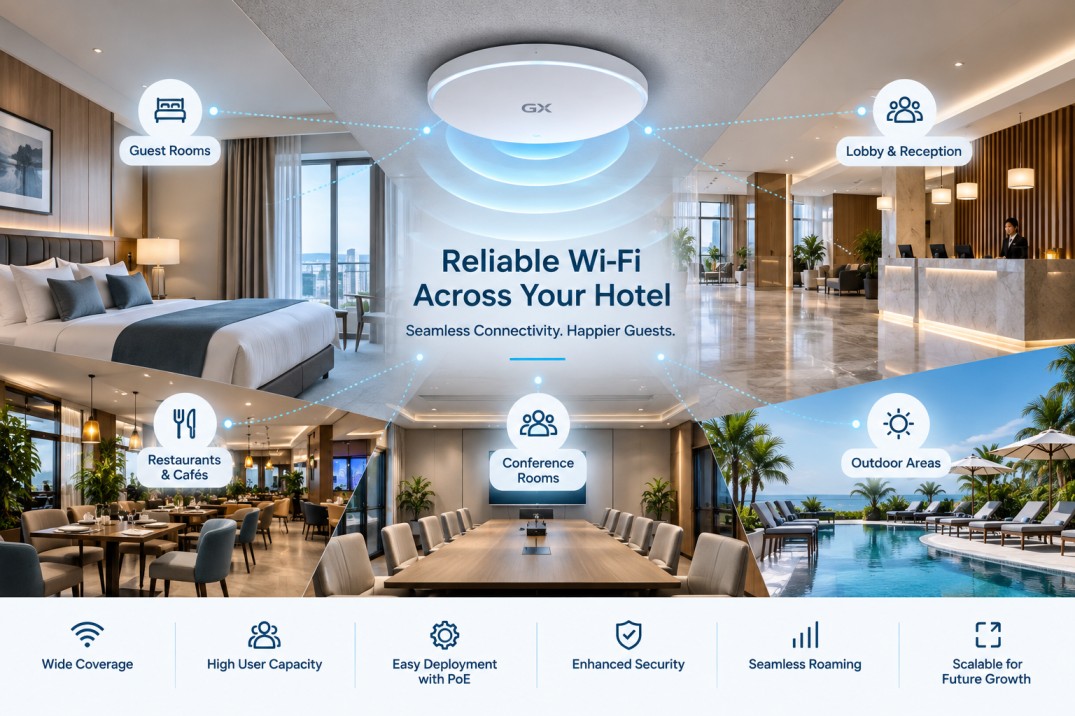
- Guest rooms
- Hallways and corridors
- Lobby and reception
- Restaurants and cafés
- Conference rooms
- Gyms and recreational areas
- Outdoor spaces
A proper site survey can help identify dead zones, interference, and the ideal AP placement.
3. Consider Guest and Device Density
Not every area of a hotel has the same number of users.
A guest room may have a few connected devices, while a conference room or lobby could have dozens or even hundreds of devices connected simultaneously.
For high-density areas, choose access points designed to handle multiple concurrent users and high traffic loads without compromising performance.
4. Choose the Right Access Point Type
Hotels may require different AP designs depending on the installation environment.
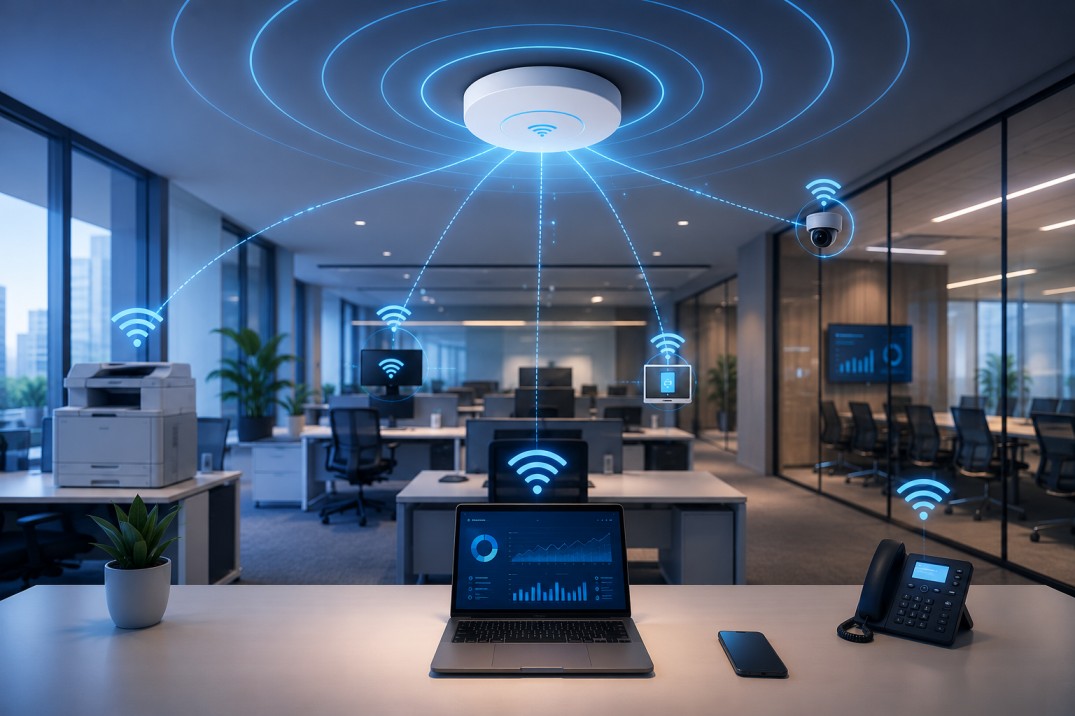
Ceiling-mounted access points are ideal for guest rooms, corridors, lobbies, and common areas because they provide broad and consistent coverage.
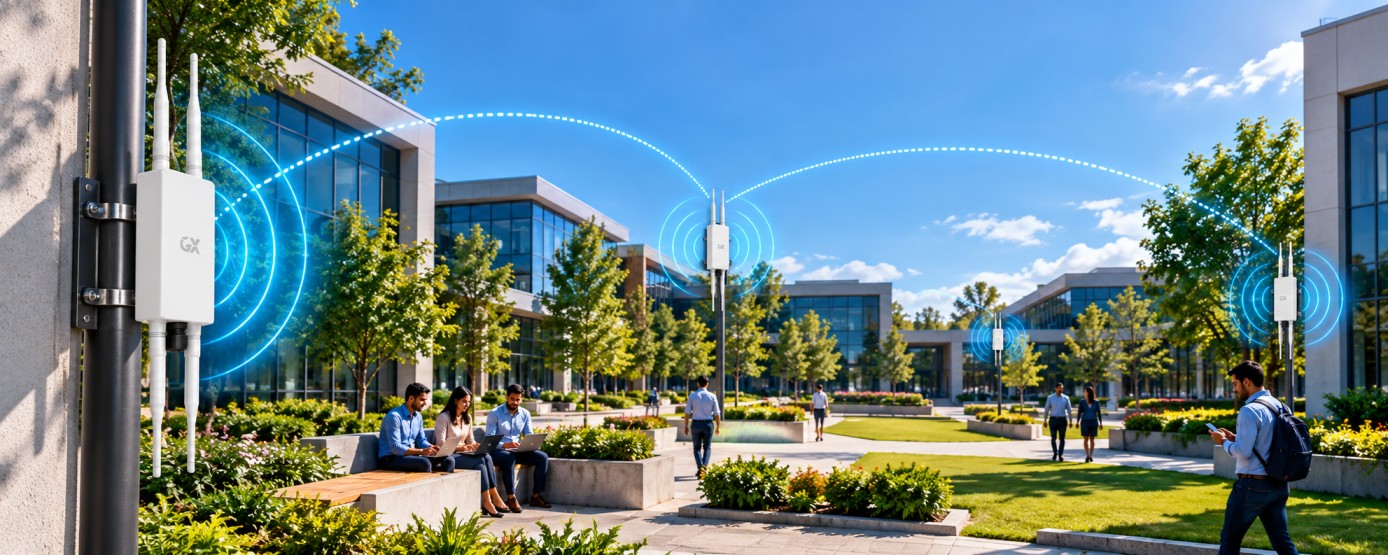
For outdoor areas such as pools, gardens, and terraces, outdoor-rated access points can provide reliable connectivity while withstanding environmental conditions.
5. Look for PoE Support
Power over Ethernet (PoE) simplifies access point installation by allowing both power and network data to travel through a single Ethernet cable.
When paired with PoE-enabled network switches, AP deployment becomes easier, cleaner, and more flexible.
This is particularly useful in hotels where installing separate power outlets near every access point may be inconvenient.
6. Consider Wi-Fi Performance and Capacity
Speed is important, but capacity is equally critical.
When selecting an AP, consider:
- Supported Wi-Fi standard
- Number of spatial streams
- Maximum throughput
- Concurrent client capacity
- Ethernet uplink speed
- Bandwidth requirements
Selecting an AP based only on its maximum advertised speed may not provide the best real-world performance. Capacity and user density should be considered together.
7. Plan for Seamless Roaming
Hotel guests should be able to move around the property without constantly reconnecting to Wi-Fi.
Proper AP placement and roaming support allow devices to transition smoothly between access points as users move from their rooms to the lobby, restaurant, meeting rooms, or other areas.
This creates a more consistent and convenient guest experience.
8. Prioritize Network Security
Hotel Wi-Fi networks handle a large number of unknown guest devices, making security essential.
Look for access points and networking solutions that support features such as:
- Secure authentication
- Guest network isolation
- VLAN support
- Access controls
- Encryption
- Network monitoring
Guest traffic should also be separated from critical hotel systems to help protect sensitive business information.
9. Choose a Scalable Solution
Hotels can grow, add new facilities, or increase the number of connected devices over time.
Choosing scalable access points and a compatible network infrastructure makes it easier to expand coverage and capacity without redesigning the entire network.
A scalable solution also helps hotels prepare for increasing demand from smart devices, IoT systems, and bandwidth-intensive applications.
10. Conclusion
Choosing the right access point for a hotel requires more than simply looking at Wi-Fi speed. Coverage, user density, installation environment, PoE support, capacity, security, and scalability all play an important role.
With the right access points and a well-designed network infrastructure, hotels can provide fast, secure, and seamless connectivity throughout the property—helping improve guest satisfaction while supporting day-to-day hotel operations.
Build Better Hotel Connectivity
The right access point creates the foundation for a reliable and connected hospitality experience.